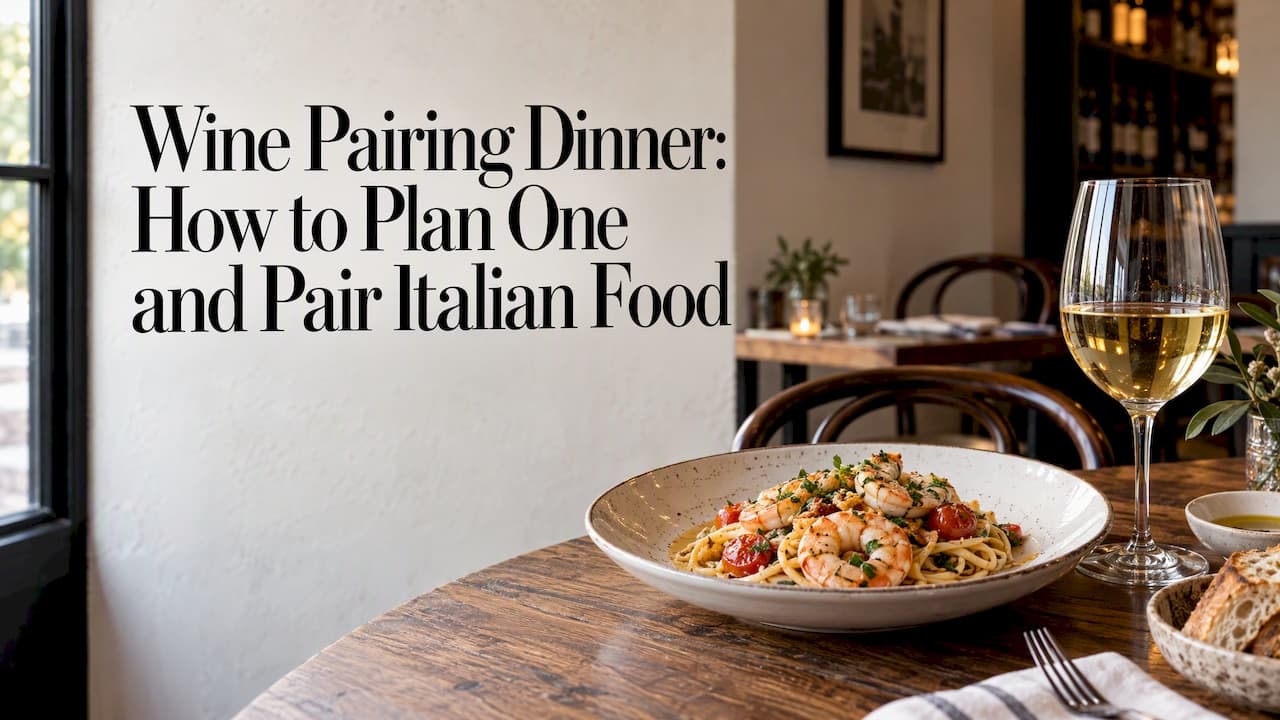
A wine pairing dinner is a multi-course meal in which each dish is served with a wine chosen to match it, moving from light to rich. Typically that means four to six courses, each with its own glass and a short explanation of why the two belong together. Below you'll find how the format works, how to order the wines, which bottles suit Italian dishes, and how to plan a dinner for your own table or a group near Haddon Township.
TL;DR
- Build the menu first, then choose the wines. Match weight to weight: delicate dishes get lighter wines, robust dishes get fuller ones.
- Move from light to heavy and, in general, from white to red and dry to sweet, because taste perception dulls as the meal goes on.
- Italian food is an easy fit: crisp whites for seafood, Chianti Classico or Montepulciano d'Abruzzo for tomato pasta, a sweeter wine for dessert.
- Plan on four or five courses and small pours so guests can enjoy every glass.
- The "75 rule" is a labeling rule, not a pairing rule.
Table of Contents
- What a wine pairing dinner actually is
- How food changes the way wine tastes
- Pairing wine with Italian dishes
- The order of the wines, course by course
- What about the "75 rule"?
- Planning your own wine pairing dinner
- Perspective
- Make an evening of it at Duo
- FAQ
- Sources
What a wine pairing dinner actually is
In a wine dinner, every course is paired with wine, dessert included, so the number of courses sets the number of wines. The courses arrive one at a time. As one account of these dinners puts it, presenting each pairing separately lets diners focus on one food-and-wine combination without feeling rushed.
There are two ways to build one. You can pick the wines first and cook around them, or you can pick the food and then find the wine. Guides disagree on which is better. Take a Chef recommends choosing the menu before the wines, which is the easier route if you're not a wine collector. The result you're after is the same either way: intentional matches, a sensible progression, and a meal that feels designed as a whole.
Why bother? Wine is a natural companion to food. Jancis Robinson points to its modest alcoholic strength and appetizing acidity, and says a well-chosen wine can make food taste better.
How food changes the way wine tastes
You don't need a sommelier's training to get most pairings right. A few principles do most of the work.
Weight with weight
Match the body of the wine to the power of the food's strongest ingredient. According to Jancis Robinson's guide, lighter-bodied wines suit delicate foods such as simple white fish, while full-bodied wines suit robust dishes such as osso buco. In the same spirit, crisp Riesling or Sauvignon Blanc goes with oysters and salads, and Syrah or Cabernet Sauvignon with red meat and stews.
Acid and sweet
Acid in food lowers the acid you perceive in the wine, and sugar does the same for sweetness. Virginia Tech's enology lab describes sweetness and acidity as especially important structural components. The practical rules that follow:
- A tomato sauce or a lemony seafood dish needs a wine with equal or greater acidity, or the wine tastes flat.
- A sweet dessert needs a sweeter wine. Otherwise the wine tastes horribly acidic, which is why dessert pairings lean toward things like Sauternes, Vouvray moelleux or sweet sherry.
Salt, fat and tannin
Salt, acidity and fat can make an acidic or tannic wine seem softer, fruitier and smoother. That's why a tannic red likes a fatty cut of meat. For salty food, the Washington State Wine Commission suggests dry sparkling wines and high-acid whites or reds, and warns that oaky low-acid whites and tannic reds can fall flat there.
The Court of Master Sommeliers sums up the toolkit as weight with weight, acidity with acidity, tannin with fat, and sweetness with sweetness.

Rules are starting points
Pairings don't have to follow rigid rules. One dinner served sea bass with tannic red blends because mushrooms, bacon and fermented black-bean sauce gave the dish savory, umami flavors that suited the reds. The sauce often matters more than the protein. WSET also reminds us that personal preference counts. If you love a pairing, it works.
Pairing wine with Italian dishes
Italian cooking is a good fit for a wine dinner. The food tends to be built on acidity, olive oil and herbs, and Italy has a grape for nearly every sauce.
| Course | Dish | Wine to look for |
|---|---|---|
| Antipasti | Prosciutto, cured meats | Pinot Grigio, dry Prosecco or light Bardolino |
| Antipasti | Fried snacks | A high-acid sparkling wine |
| Pasta, seafood | Spaghetti alle vongole | Vermentino, Fiano or Falanghina |
| Pasta, tomato | Tomato-based sauces | Chianti Classico or Montepulciano d'Abruzzo |
| Pasta, creamy | Cheesy polenta | Friulano, for its medium acidity, texture and freshness |
| Entree | Saltimbocca (prosciutto, sage, butter and white wine) | An earthy, complex Tuscan red |
| Dessert | Sweet courses | A wine at least as sweet as the dish |
Seafood pastas
A dish like squid-ink pasta with shrimp and scallops uses a light sauce of white wine, lemon, olive oil and garlic to protect the sweetness and briny character of the seafood. The wine should do the same: stay crisp, stay light, and don't add oak. Vermentino and Fiano are the obvious places to start.

Tomato sauces and richer entrees
Tomato is acidic, so the wine needs freshness of its own. That's the logic behind Chianti Classico and Montepulciano d'Abruzzo with red sauce. For richer entrees with salty, savory elements, a Tuscan red with some earthiness has the structure to hold up.
Starters and finger foods
For antipasti, keep wines light, crisp and refreshing. Bruschetta depends on the topping: a tomato-heavy one wants acidity, a creamy one wants something with a little more texture.
The order of the wines, course by course
The formal Italian meal runs antipasto, primo, secondo, insalata, formaggio, dolce and caffè, moving from lighter to heavier food and from white to red wine, with variations to suit the dishes. A typical wine arc, per the Court of Master Sommeliers, goes from lighter to fuller-bodied and from drier to sweeter.
The reason is physical. Wine Folly notes the order protects delicate flavors early and saves the bolder wines and desserts for a palate that is less sensitive by then.
A sample five-course Italian sequence:
- Welcome: dry sparkling wine with a small bite.
- Antipasto: a crisp white such as Pinot Grigio.
- Pasta or seafood: a more textured white such as Vermentino or Fiano, or a light red if the sauce calls for it.
- Main: a medium-to-full red, such as a Tuscan red.
- Dessert: a sweeter wine to match the dish.
The order isn't mandatory. Wine writer Randy Caparoso says it can bend when each food-and-wine match is harmonious and balanced. Fish can come before pasta to preserve a white-to-red run, and salmon can take a lighter red.
Pours and timing
Restaurants that pair wine professionally keep pours small. One hospitality standard calls for about 75 ml per pairing glass, and 50 ml for sweet wine, poured a minute or two before the dish lands. That's about 2.5 oz, so five courses add up to a bit over two standard glasses. Small pours keep everyone clear-headed for the last course.
What about the "75 rule"?
People searching for pairing advice often run into this phrase, but it isn't a pairing guideline. In the US, it's the labeling standard under which a wine naming a grape variety must be at least 75% that grape. Useful when reading a label, because a "Cabernet Sauvignon" may contain other grapes, but it won't tell you what to pour with your pasta.
Planning your own wine pairing dinner
If you're hosting at home, a few habits help:
- Keep it to four or five courses. A relaxed format is a fresh appetizer, a seafood or light course, a rich main, optional cheese and dessert, as Take a Chef suggests.
- Make sauces ahead and desserts the night before. Take reds out about 30 minutes before serving, and keep whites on ice between pours, per the same guide.
- Write the order on a card. Guests like to know what's coming and why.
- Taste your own pairings first. Preferences differ, and you'll catch a clash before your guests do.
If you'd rather not cook for eight, a restaurant with a scratch kitchen and a real wine list is the easier host.
Perspective
We cook nearly everything from scratch, so we think about pairing the way a home cook does: start with the dish, then ask what the sauce is doing. A bright seafood pasta and a rich, slow-cooked entree want very different glasses, and we'd rather help you find the match you'll enjoy than push a rigid rulebook.
Our kitchen leans on seasonal ingredients, including seafood from Long Beach Island when it's available. That's why we like crisp, savory whites for the shore-driven dishes and structured reds for richer plates. Our wine list is curated to cover both ends of that range, and our bar team is happy to talk through what's pouring.
The best wine dinners aren't formal. They're a table of friends, a few well-chosen courses and a glass that makes the next bite better. That's the kind of night we built Duo for.
Jay
Make an evening of it at Duo
Duo Restaurant & Bar is a family-owned neighborhood spot in Haddon Township, from the same team behind Il Villaggio in Cherry Hill. We cook homemade Italian favorites in a scratch kitchen and keep a curated wine list alongside signature cocktails and 18 craft beers on tap.

If you want to try the pairing ideas above without the cooking, there are a few ways in:
- Our Chef's Menu is $98 per person.
- Our happy hour menu lists wine specials at $8 per glass, signature cocktails at $10 to $12 and plates and bites at $12, a low-pressure way to taste a few styles beside small plates.
- For a birthday, a team dinner or a small celebration near Haddonfield, see our private dining options. Event menus start at $36 per person.
- Browse the full menu to plan your courses before you arrive.
For wine selections and what's pouring, ask us when you book.
FAQ
What wine should I have with dinner?
Start with the weight of the dish. Light food like white fish or salad suits a lighter, crisp wine, and robust food like braised meat suits a fuller one. If the sauce is acidic, such as tomato, choose a wine with matching acidity. Then trust your own taste.
How many courses and wines are in a wine pairing dinner?
Most run four to six courses, each with its own wine. For a home dinner, four or five courses is plenty. Keep pours small so guests can enjoy the whole sequence.
Which wines go with Italian food?
Crisp whites such as Pinot Grigio, Vermentino and Fiano suit antipasti and seafood. Chianti Classico and Montepulciano d'Abruzzo suit tomato pasta, as the WSJ Wine guide lays out. Richer entrees with salty, savory sauces can take an earthy Tuscan red.
Do I have to serve white before red?
No, but it's the usual starting point. The traditional order is lighter before fuller, dry before sweet, and white before red. It can bend when each course and its wine are well matched, for example when fish comes before pasta.
Sources
- Deconstructing a Wine Dinner From Starters to Dessert
- Exploring Epicurean Experiences: Wine Pairing Dinners
- How to host a wine pairing dinner at home
- What is wine pairing dinner?
- Matching wine and food, an introduction (Jancis Robinson)
- Food and Wine (Virginia Tech Enology Grape Chemistry Lab)
- Wine food matching essentials (WSET)
- Your Wine Pairing Cheat Sheet (Washington State Wine Commission)
- Food and Wine Matching (Court of Master Sommeliers)
- Italian Food and Wine Pairing Guide (WSJ Wine)
- Cheesy polenta and Friulano (Food & Wine)
- Chicken Saltimbocca Recipe (Food & Wine)
- Squid Ink Pasta With Shrimp and Scallops (Serious Eats)
- La Cena Italiana Formale (Il Cenacolo SF)
- Wine Pairing Service standard (DolceVita)
- Composing menus for wines (Randy Caparoso)
- What is the 75 rule for wine?