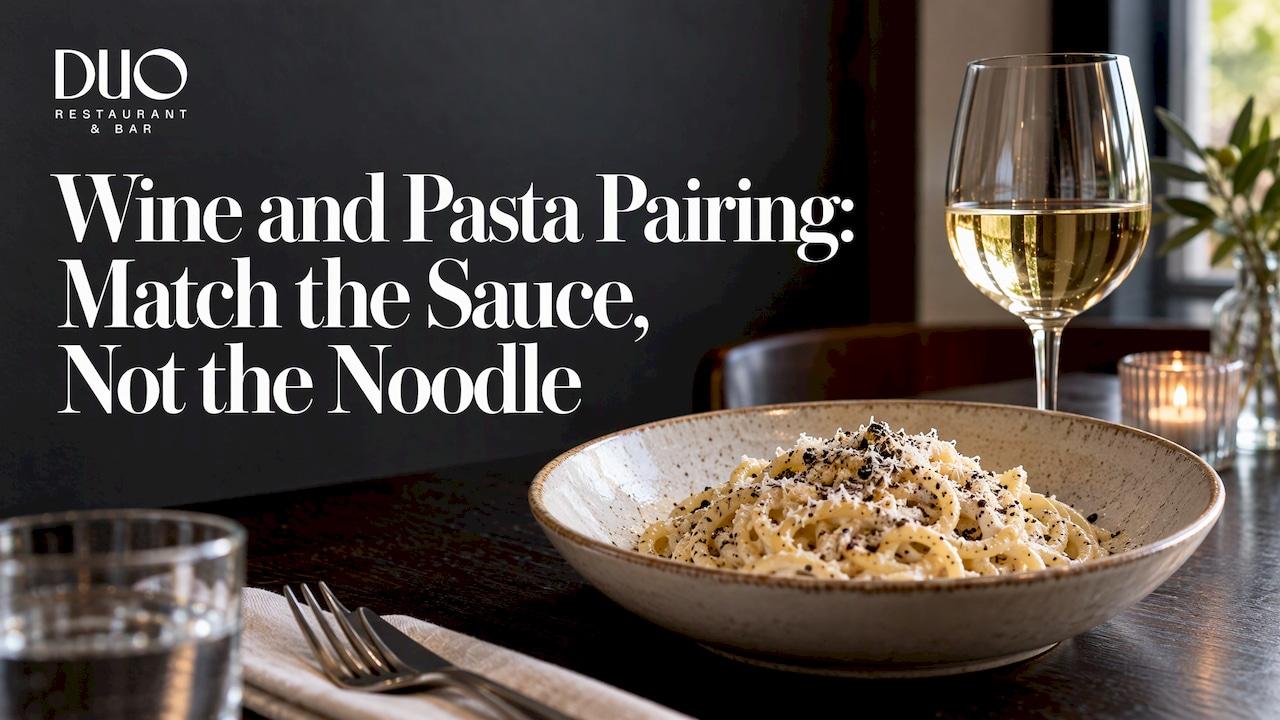
The simplest way to pair wine with pasta is to ignore the noodle and look at the sauce. Pasta itself is a neutral base, so the wine should answer whatever sits on top: the acidity of tomato, the richness of cream, the brine of seafood, the weight of a slow-cooked ragù. Get that one decision right and red or white, Italian or not, almost takes care of itself. Here is how to do it at the table, with picks for each sauce and a few ways to order with confidence from a restaurant wine list.
TL;DR
- Choose by sauce: tomato and meat sauces lean toward medium-bodied, high-acid reds; cream, oil, herb and seafood sauces lean toward crisp whites.
- Match weight to weight: a heavy, cheesy, meaty dish wants a wine with more body, and a light olive oil and vegetable dish wants a lighter one.
- Avoid big oak and heavy tannin with most sauces, because they overpower the dish.
- At a restaurant, tell your server red or white and your price range, then let them suggest a style.
- Many of the best everyday pasta wines are Italian and not expensive.
Table of Contents
- Why the sauce decides the wine
- Red or white with pasta?
- Pairings by sauce
- What Italians actually pour
- Four mistakes that spoil a good plate
- Choosing from a restaurant wine list
- Pairing pasta at Duo
- Our point of view
- FAQ
- Sources
Why the sauce decides the wine
Wine Spectator's most important pairing rule for pasta is to match the wine to the most prominent element in the dish, which is usually the sauce, and to balance the food's weight with the wine's body. Weight comes from fat, cooking method and sauce. A plate loaded with cheese and beef feels heavier than one tossed with olive oil and fresh vegetables, so the wines that suit them differ.
Three things do most of the work:
- Acidity. Tomato sauce is acidic. A wine with similar acidity keeps both tasting bright, while a low-acid wine tastes flat next to it.
- Body and tannin. Tannin is the dry, grippy feeling red wine leaves on your gums. Plain tomato sauce clashes with it. A rich ragù, with its fat and protein, softens it.
- Richness. Cream, egg and cheese coat the palate, so a wine with citrus and mineral freshness cuts through and resets your mouth between bites.
Decanter's Raffaele Mosca notes there are no strict rules for pasta and wine, but light to mid-weight wines with a good balance of fruit and acidity work best, while bold or heavily oaked wines tend to overpower any sauce. That is a good compass for everything below.
Red or white with pasta?
Let the sauce answer it. As a shorthand, tomato and meat sauces lean red, and cream, oil, butter and herb sauces lean white. Seafood leans white, and sometimes sparkling.

There is also a third way worth knowing: a light red served with a slight chill. Harper's Bazaar's advice on choosing wine for a meal includes asking for lighter reds to be served slightly chilled, which works nicely when the table is splitting a tomato dish and a creamy one.
Pairings by sauce
| Sauce or dish | Style to look for | Wines to try |
|---|---|---|
| Tomato or marinara | Medium-bodied, high-acid, low-tannin red | Chianti, Sangiovese, Barbera |
| Meat ragù or Bolognese | More power and tannin | Montepulciano d'Abruzzo, Nebbiolo, Aglianico |
| Cream or Alfredo | Citrusy white with some body | Vermentino, light Chardonnay |
| Carbonara | Crisp but fuller white | Soave Classico, Pinot Grigio from Alto Adige |
| Seafood | Crisp, dry white or sparkling | Vermentino, Pinot Grigio, Champagne-style sparkling |
| Pesto or herbs | Fresh, aromatic white | Gavi, Soave, Verdicchio |
| Mushroom | Soft red or creamy white | Pinot Noir, creamy Chardonnay |
| Spicy | Fruity, slightly softer wine | Zinfandel, Primitivo, Lambrusco |
Tomato sauce
For tomato-based pasta, Wine Spectator calls a fruity, bright, medium-bodied red like Chianti, which is Sangiovese from Tuscany, the go-to, and adds that you do not need an expensive bottle. Food & Wine's Anthony Giglio starts with acidity, then considers sweetness and depth. Cooking softens tomato acidity and brings out sweetness, and tannic, oaky, full-bodied reds clash with the sauce.
Food & Wine also lists Italian reds that fit: Barbera and Dolcetto from Piedmont, Chianti Classico, and Mount Etna reds from Sicily, with dry Lambrusco as a sparkling choice. It steers away from very light whites such as Pinot Grigio, which can collapse under the sauce.
Preparation matters too. Decanter points out that fresh tomatoes taste more acidic than ready-made sauces, which tend to be sweeter, and a shower of Parmigiano Reggiano adds savoriness. A bright, simple sauce wants a lively, lighter red. A slow-simmered, sweeter one can handle a little more fruit. If you like to see this logic in a glass you can buy, estate-grown Texas Sangiovese shows the grape's bright, food-friendly acidity.
Meat ragù and Bolognese
Rich, slow-cooked sauces earn a bigger wine. Great Italian Chefs recommends Brunello di Montalcino, aged Aglianico such as Taurasi, or Montepulciano d'Abruzzo for Bolognese or beef ragù. The reason, as the wine writers at Gusta explain, is that the protein and fat in a ragù soften tannin, so reds that would feel harsh against plain tomato sauce become generous here.
If you want the full story on hearty Italian mains, our guide to Italian meat dishes covers what to order and how to think about the wine that follows.
Cream, butter and cheese sauces
For an Alfredo-style sauce, Wine Spectator suggests a Vermentino from Sardinia or Liguria. Its body sits between Chardonnay and Pinot Grigio, and its citrusy, minerally tang cuts the cream. The same piece advises steering clear of big, oak-laden whites, which pile richness on richness.
For cheese sauces more broadly, the International Wine & Food Society's pairing guide lists Verdicchio, light Chardonnay and even Merlot. The through-line is freshness with enough body to stand up to the cheese.
Carbonara and cacio e pepe
These two Roman classics look simple and are surprisingly hard to pair. Decanter says carbonara needs high acidity to counter the richness of egg and Pecorino Romano, but enough smoothness to avoid fighting savory pork and pepper, so it recommends full-bodied but elegant whites with subtle oak, such as white Burgundy or a good Soave Classico. Great Italian Chefs prefers a quality Pinot Grigio from Alto Adige or Collio, or Gavi di Gavi.
Cacio e pepe has very few ingredients, so Tasting Table's advice is to choose a wine that is not too loud. A clean, dry white lets the pepper and cheese stay in front.

Seafood pasta
For seafood pasta, think crisp, dry and mineral. The IW&FS guide pairs seafood ravioli with sparkling wines, Pinot Grigio, Viognier or cool-climate Chardonnay. Vermentino is the classic Italian coastal answer. If your seafood arrives in a cream sauce, move up to a slightly fuller white, as the Alfredo advice above suggests.
Pesto, vegetables and mushrooms
Pesto and spring-vegetable pastas suit fresh, aromatic whites. The IW&FS guide lists Gavi, Soave and Verdicchio for pesto, and Pinot Bianco or Loire Sauvignon Blanc for spring vegetables. Mushroom ravioli is one of the few places where a soft, earthy Pinot Noir beats a white, though a creamy Chardonnay works as well. For more ideas on herb and vegetable sauces, this take on fresh vegan pesto shows how much the herbs shape the dish.
Spicy pasta
Heat changes the rules. For arrabbiata, Tasting Table notes you have to weigh tomato acidity and the spice together. The IW&FS guide points to Primitivo, Zinfandel, Sicilian reds and Valpolicella Ripasso for spice sauces. Keep the tannins gentle and the fruit generous.

What Italians actually pour
In Italy, pairing is mostly local. Saveur reports that in Piedmont, Barbera is the customary partner for agnolotti del plin, while Barolo and Barbaresco are considered too strong for it. Barbera is an everyday wine there, and historically it was poured over the pasta itself as a kind of nourishment.
The lesson travels well: pair like a neighbor would. Wines that grow near the dish, and that are made for the table rather than the cellar, tend to be the easiest matches.
Four mistakes that spoil a good plate
- Choosing by pasta shape. Spaghetti or rigatoni is not the variable. The sauce is.
- Too much oak. Heavily oaked whites and reds flatten delicate sauces and clash with acidic ones.
- Too much tannin with plain tomato. Save big tannic reds for ragù and baked, cheesy dishes.
- Going too light with rich dishes. A cream or baked pasta needs a wine with some body.
One more idea to keep in your pocket is the consistency rule: match a simple sauce with a simple, clean wine, and save the complex bottle for a complex dish. Aglio e olio with a loud, barrel-fermented white is a mismatch you can taste.
Choosing from a restaurant wine list
A wine list can feel like a test. It does not have to. Harper's Bazaar's guidance is to tell your server the two decisions you have already made, red or white and your price range, then describe the style you want: bold and fruit-forward, or lighter and acidic. It also reminds diners that the less expensive bottles on a thoughtful list are often excellent values. When the bottle arrives, check the label and vintage and taste it before it is poured for the table.
A practical routine for a pasta night:
- Decide what everyone is ordering. Mixed tables do well with one flexible bottle: a bright Italian red for tomato and meat, or a medium-bodied white for cream and seafood.
- Name the sauces to your server, not the pastas.
- Ask for something fresh and moderate in body if the table is split.
- If people are ordering very different dishes, go by the glass and let each plate have its own match.
A scratch kitchen suits this kind of pairing, because the sauces change with the season and the cook's hand. Our piece on what a scratch kitchen restaurant is explains why, and if you like planning an evening around the glass, our guide to a wine pairing dinner goes deeper.
Pairing pasta at Duo
We make our pastas by hand in a true scratch kitchen in Haddon Township, and we pair that with a full bar and a curated wine list. If you want to taste the sauce-first approach for yourself, our by-the-glass wine specials start at $8 a glass, which makes it easy for two people to try a tomato-friendly red and a crisp white across the same meal. Our full menu shows the pastas and, when it is available, the Long Beach Island seafood that calls for a dry, bright white.

Whether it is a date night, dinner with friends from Haddonfield or Collingswood, or a family table, come hungry and tell us what you are craving. We will help you find the glass that suits it. For a gathering, take a look at our private dining options.
Our point of view
We cook pasta the way we would at home for people we love, which means the sauce is always the star, and the wine is there to make it taste even more like itself.
That is why we do not hand anyone a rule like "red with red sauce" and leave it there. A bright tomato sauce made with ripe seasonal ingredients wants a lively, high-acid red. A creamy dish wants something fresh to cut through it. When Long Beach Island seafood comes into our kitchen, the answer is almost always a crisp, dry white. A good pairing should feel obvious once you taste it.
Our wine list is curated with that in mind, and we keep a few by-the-glass specials so you can experiment without committing to a whole bottle. We would rather you leave having found a pairing you love than one you think you should have ordered.
Come in, tell us what you are in the mood for, and let us do the rest.
Jay
FAQ
What wine goes with pasta in general?
It depends on the sauce. Tomato and meat sauces pair well with medium-bodied, high-acid reds such as Chianti, Sangiovese or Barbera, and cream, oil, herb and seafood sauces pair well with crisp, dry whites such as Vermentino or Pinot Grigio. When in doubt, choose a wine that is fresh and moderate in body.
Should I choose red or white wine with pasta?
Look at the sauce, not the noodle. Red suits tomato and ragù, and white suits cream, pesto and seafood. If your table is mixed, order a bright, lighter red that can be served slightly chilled, or choose wines by the glass.
What wine do Italians drink with pasta?
It is regional. In Piedmont, Barbera is the customary partner for agnolotti, and elsewhere Sangiovese, Vermentino and local whites are common. Italians tend to choose the wine that grows near the dish's home.
Do I need an expensive bottle for a good pasta pairing?
No. Wine Spectator notes that Chianti offers many great values for tomato pasta. Choose by style and sauce, tell your server your price range, and let them guide you to a bottle that fits.
Sources
- Which Wines Pair Best with Pasta? (Wine Spectator)
- The Best Wine With Pizza, Pasta, and Other Tomato Sauce (Food & Wine)
- Italian pasta and wine: The best pairings for popular dishes (Decanter)
- How to pair Italian food and wine (Great Italian Chefs)
- The Best Wine Pairings For 10 Popular Types Of Pasta Sauce (Tasting Table)
- Pasta, Rice and Noodles Pairing Guide (International Wine & Food Society)
- This Region of Italy Sauces Their Pasta With Wine (Saveur)
- How to Choose the Best Wine for Your Meal (Harper's Bazaar)
- What Wine Goes With Pasta? (Gusta)