The easiest way to choose a drink with Italian food is to match it to the sauce, not the noodle. Bright, acidic drinks suit tomato. Crisp, mineral whites suit seafood. Bitter, bubbly aperitivo drinks open the meal. At Duo Restaurant & Bar in Haddon Township, we cook pasta from scratch and keep a full bar beside the kitchen, so the whole table can be planned in one sitting: signature cocktails, a curated wine list and 18 craft beers on tap.
TL;DR
- Pair with the sauce: acidity for tomato, richness for cream, delicate whites for seafood.
- Start with something bitter or sparkling; it wakes up the appetite and cuts through salty, fried starters.
- Beer works too: lighter styles for cheese and seafood, more flavorful ones for spicy or meaty dishes.
- Zero-proof drinks pair well when they keep the food in the lead, with citrus, bubbles and bitterness doing the work.
- When in doubt, order a small pour or a shared bottle and let the table taste across dishes.
Table of Contents
- Start with the sauce, not the pasta shape
- Wine with Italian food
- Cocktails with Italian food
- Beer with Italian food
- Pizza and other casual favorites
- Zero-proof drinks that still belong at the table
- What we pour at Duo
- Matching drinks to the evening you are planning
- Our perspective
- Plan your next dinner with us
- FAQ
- Sources
Start with the sauce, not the pasta shape
Most people choose a drink by the name of the dish: spaghetti, rigatoni, linguine. The better question is what is on the pasta. A tomato sauce, a cream sauce and a clam sauce can all sit on the same noodle, and each wants a different glass. Tasting Table's guide to pasta sauce pairings follows the same logic, matching high-acid Sangiovese with pomodoro or marinara, Chardonnay with Alfredo and Sauvignon Blanc with pesto.
Three questions get you most of the way there:
- How acidic is the dish? Tomato-based dishes need a drink with its own brightness, or the drink tastes flat beside them.
- How rich is it? Cream, cheese, sausage and fried food are cut by acid, bubbles or bitterness.
- How delicate is it? Clams, white fish and simple lemon-butter sauces are easy to overpower, so choose something light and crisp.
We go deeper on this in our guide to wine and pasta pairing, but the three questions above will carry you through almost any Italian menu.
Wine with Italian food
Wine is the traditional answer, and it earns the reputation. Italian reds and whites were made to sit next to Italian cooking.
Red-sauce dishes
For marinara, pomodoro, baked pastas and tomato-based meat dishes, look for a red with lively acidity and moderate tannin. Food & Wine's tomato-sauce guide recommends matching the wine's acidity to the tomato's and cautions that big, tannic, oaky reds can clash with the sauce. Sangiovese-based wines such as Chianti are the classic fit, and Barbera and dry Lambrusco, which has a tart edge and a little sparkle, are good alternatives. The same guide names them for pizza too.
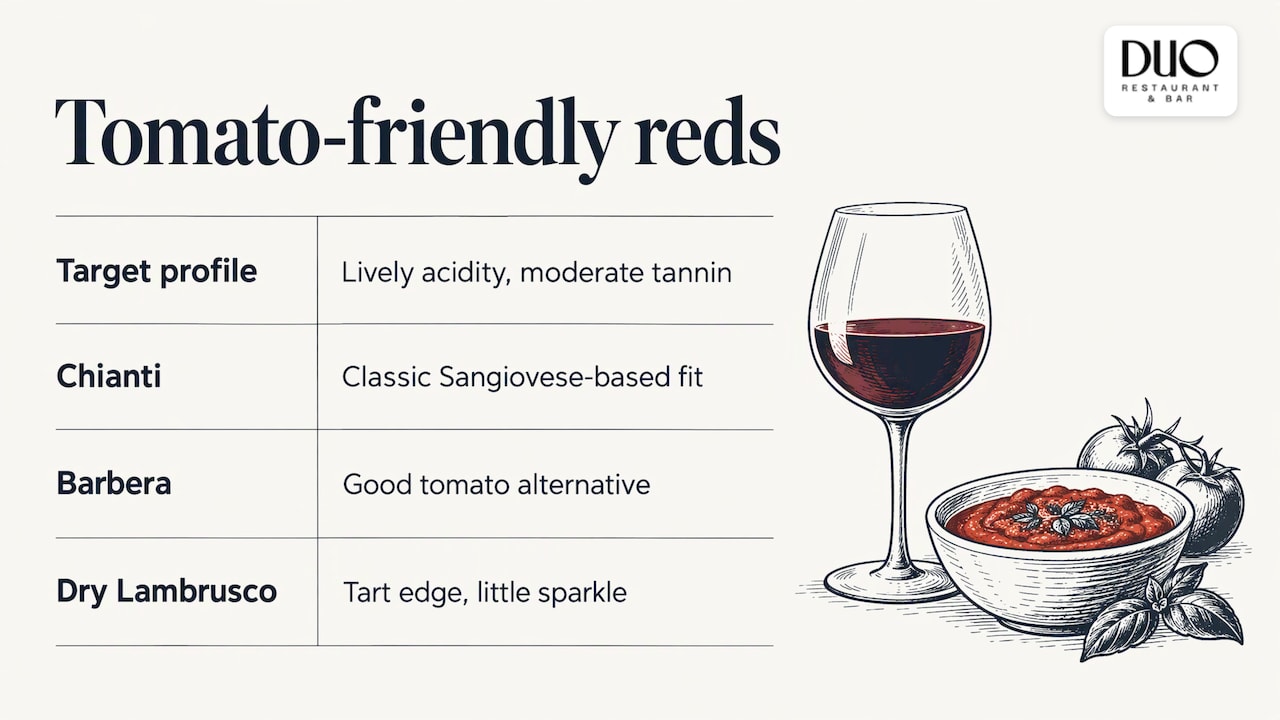
A practical rule: if the red feels heavy or jammy by itself, it will feel heavier next to tomato. Choose the lighter, fresher bottle.
Cream, cheese and butter
Richer sauces such as Alfredo ask for a fuller white with some body. Chardonnay is the textbook match, according to Tasting Table, and the same piece pairs Prosecco with the peppery, cheesy bite of cacio e pepe, where bubbles refresh the palate between forkfuls.
Seafood
Delicate seafood wants a crisp, mineral white. Think of the light, citrusy whites of coastal Italy rather than anything oaky. If you are ordering a seafood pasta or a simple fish entrée, a bright white or a dry rosé keeps the sweetness of the shellfish front and center. Because we use seafood from Long Beach Island when it is available, this is the pairing we think about most. Our guide to Italian seafood dishes explains how those classics are built and how to order them.
A quick wine cheat sheet
| If you are ordering | Reach for | Why it works |
|---|---|---|
| Marinara or pomodoro pasta | Sangiovese-style red, light Barbera | Acidity matches the tomato |
| Ragù or meat sauce | Medium-bodied red, dry Lambrusco | Enough body without fighting the sauce |
| Alfredo or cream sauce | Chardonnay | Weight to match the richness |
| Pesto | Sauvignon Blanc | Fresh, herbal notes echo the basil |
| Cacio e pepe | Prosecco | Bubbles reset the palate |
| Clams or white fish | Crisp, mineral white | Lets the seafood speak |
If you want a fuller walk-through, our simple guide to Italian food and wine pairing covers the rest of the menu, and our wine pairing dinner guide helps if you are planning a whole evening around it.
Cocktails with Italian food
Cocktails get overlooked at Italian dinners, which is a shame. The same principles apply: acid, bitterness and bubbles are what refresh the palate between rich bites.
Begin with the aperitivo
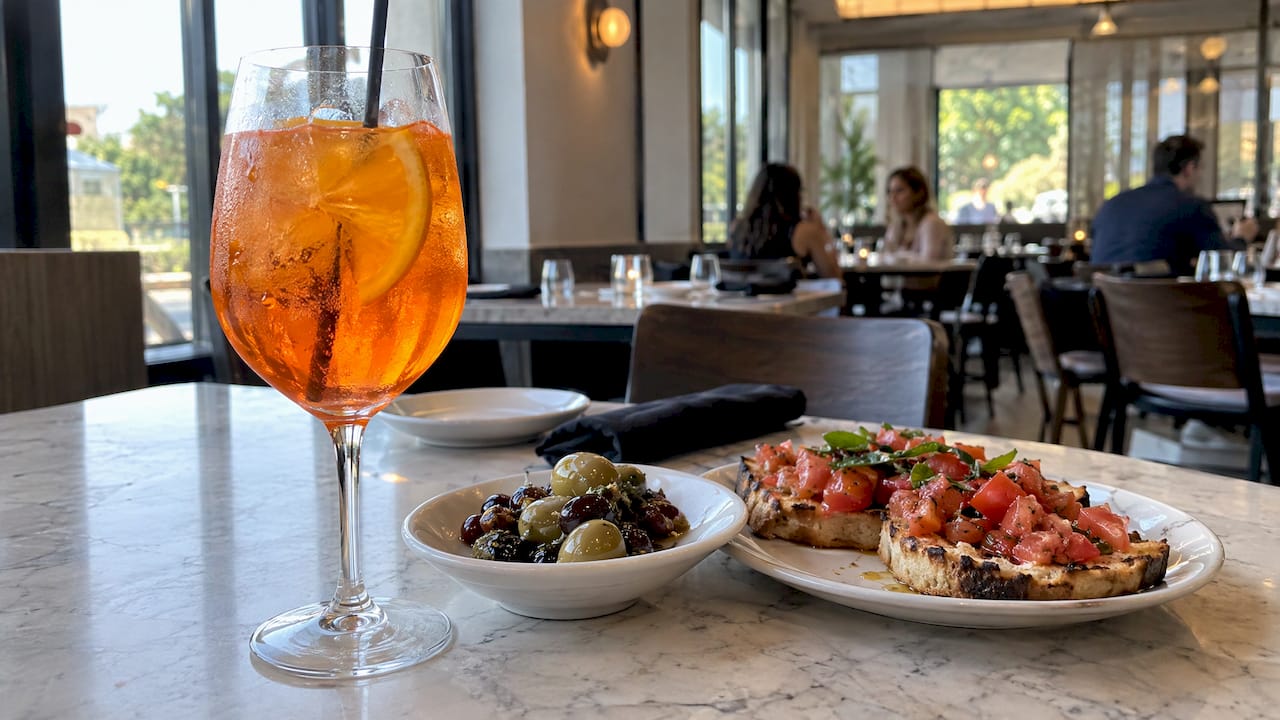
Italian meals traditionally start with something bittersweet and sparkling, such as a Negroni or an Aperol Spritz. These drinks are low in sweetness relative to their flavor, and their bitterness and citrus peel cut through salty, fried or creamy starters. Think olives, bruschetta, cured meats and anything with a crisp edge. They also pair well with an order of small plates. If you are building a shared first round, our guide to Italian small plates shows how to order them.
Keep the main course in mind
A cocktail that is too sweet or syrupy can flatten a savory dish. Food Republic's advice for chicken piccata is a good example: it recommends zippy, acidic drinks such as a Tom Collins, French 75 or Aperol Spritz, and warns that syrupy or very bitter cocktails can overpower the plate. The lemon-and-caper style of dish is a good model for any bright, pan-sauced entrée.
A few simple matches follow from that:
- Citrus-forward and sparkling drinks for lemon sauces, seafood and fried starters.
- Bitter-orange drinks for tomato-forward dishes and pizza.
- Spirit-forward, slightly fruity drinks for cured meats and aged cheeses.
Our practical guide to food and cocktail pairing goes further if cocktails are your main interest.
Beer with Italian food
Beer is a natural partner for Italian cooking, especially for the casual dishes most people order on a weeknight: pizza, baked pasta, sausage, fried calamari. Carbonation and a little bitterness do the same job that acidity does in wine.
The rules of thumb are easy to remember:
- Light, crisp beers such as pilsners and pale lagers suit cheese-heavy dishes and vegetable toppings without weighing them down.
- Hoppier beers can stand up to spicy or very rich dishes, though Food Republic notes that hop-heavy IPAs can overpower a delicate dish like piccata.
- Lighter wheat beers and blondes are gentle with lemon, herbs and seafood.
With 18 craft beers on tap at Duo, a table of friends can order a few different pours and trade sips across the pasta, the pizza and the small plates. Our guides to beer and pasta pairing and beer and food pairing explain how to match a style to a sauce, and the beer pairing dinner guide helps you plan a group evening around it.
Pizza and other casual favorites
Pizza is the dish where the most arguments happen, and the good news is that nearly anything bright and cold works. Saveur's pizza pairing guide recommends a briny, acidic white for Margherita and smoked-mozzarella pizzas, because that acidity cleanses the palate between bites of creamy cheese. For white vegetable pizzas, it suggests a white with balanced acidity.
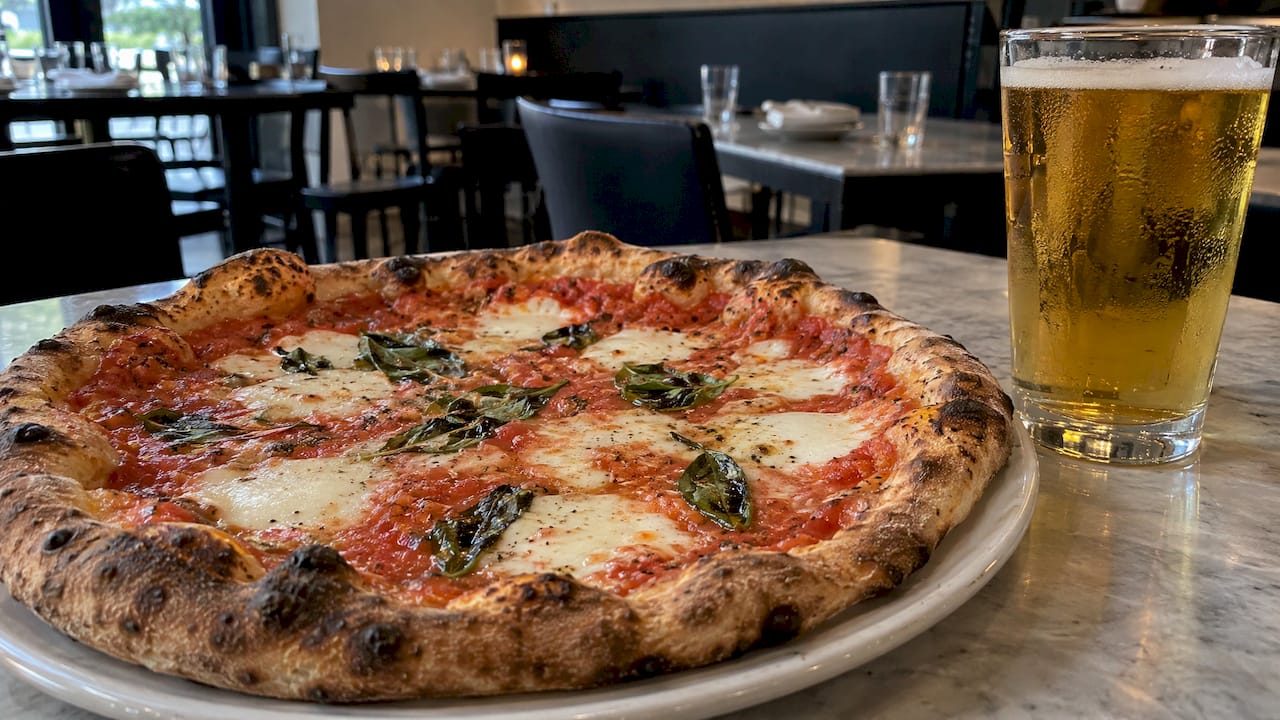
The pattern is consistent: whatever sits on top, the drink should refresh. Acid, bubbles and bitterness all do that. A dry rosé, a light red or a crisp lager will rarely let you down.
Zero-proof drinks that still belong at the table
Not everyone at your table is drinking alcohol, and nobody should feel they are drinking a consolation prize. The principle from the experts quoted by Tasting Table is to keep the food central and balance or complement its flavors rather than mask them. A zero-proof spritz and a citrus drink topped with a nonalcoholic sparkling beverage are both good options with Italian food.
Chowhound's guide to nonalcoholic pairings goes a step further with specific matches:
- Dealcoholized red with hearty dishes such as pasta e fagioli or eggplant parmigiana.
- Nonalcoholic white, sparkling wine or rosé with creamy risotto or an Italian-style salad.
- A nonalcoholic Negroni-style drink with anchovy, bitter greens or bruschetta.
- An alcohol-free Garibaldi, an orange and bitter-aperitivo drink, with pizza or buffalo mozzarella.
The idea is the same as with any other glass: look for acidity, a little bitterness and some fizz. If you are hosting and want ideas for a first drink as guests arrive, these non-alcoholic welcome drinks are a good starting point for setting the tone before dinner.

What we pour at Duo
We built the bar to match the kitchen. Everything starts from the idea that a good neighborhood dinner should feel easy: you sit down, you are handed something good to drink, and the food arrives in a natural rhythm.
Here is what is available and how we would suggest using it:
- Signature cocktails, $10 to $12. A good opener, or a companion for small plates and seafood. They are listed on our happy hour menu.
- By-the-glass wine specials, $8 per glass. Ideal if you want to try a different wine with each course rather than commit to a bottle.
- Plates and bites, $12. Shareable starters to enjoy with the first round of drinks.
- 18 craft beers on tap. Easy for groups where everyone likes something different.
- A curated wine list. For when you want a bottle for the table.
For the main course, our kitchen focuses on housemade pastas, seasonal seafood from Long Beach Island when available, and premium domestic meats. You can see everything on the full menu.
Matching drinks to the evening you are planning
The right drink also depends on the kind of night you want.
Date night. Start with a cocktail or a glass of something sparkling, then share a bottle or switch to a by-the-glass pour with the pasta. Keep the pace slow; Italian dinners are meant to be.
Friends and a casual night out. Order a few small plates for the table and a round of draft beers, then let everyone choose their own pasta and glass.
Family dinner. Pair the grown-ups' wine or beer with the same dishes the kids are eating, and offer a zero-proof spritz or citrus soda so everyone has something festive.
A small group gathering. For celebrations, we offer private dining and event menus, including a cocktail reception. Details are on our private dining page.
Our perspective
We cook nearly everything in-house, and that shapes how we think about drinks. Scratch-made sauces taste like what they are made of: real tomatoes, real garlic, fresh seafood. A drink should respect that.
Our rule is simple. Pair for freshness first. A bright cocktail, a crisp beer or a lively glass of wine is rarely the wrong answer next to handcrafted pasta, and you do not need to memorize a chart. Choose the sauce, think about whether it is rich, tomato-forward or delicate, and pick a drink that refreshes.
We built Duo as a neighborhood spot, so you can come in without ceremony. Ask us for a suggestion, order a small pour and see how it plays with your plate. Come hungry, leave inspired.
Jay
Plan your next dinner with us
If you are thinking about where to enjoy a thoughtfully paired Italian dinner near Haddonfield, Collingswood or Haddon Heights, we would love to welcome you at Duo. Our team is the same family behind Il Villaggio in Cherry Hill, and we opened in Haddon Township in 2026 with a scratch kitchen, a full bar and a warm, modern-rustic dining room.

Browse the full menu, take a look at our happy hour drinks and plates, or visit our home page to reserve a table or buy a gift card for someone who loves Italian food.
FAQ
What drinks go well with Italian food?
Match the drink to the sauce. Tomato dishes pair with acidic reds or rosé, cream sauces with fuller whites, and seafood with crisp, mineral whites. Bitter, sparkling aperitivo cocktails and light, crisp beers also work across most of the menu.
Is red or white wine better with pasta?
Neither is better by default. Red-sauce and meat-based pastas suit medium-bodied reds with good acidity, while creamy, cheesy or seafood pastas suit whites. A dry rosé sits comfortably in the middle for tables sharing many dishes.
What cocktail should I order with Italian food?
Choose something bright and not too sweet. Spritzes, citrus-forward sparkling cocktails and bittersweet aperitivo drinks are the classic choices, especially with starters, fried dishes and pizza. Food Republic warns that very syrupy cocktails can overpower savory plates.
What can I drink with Italian food if I do not drink alcohol?
Look for acidity, a little bitterness and bubbles. A zero-proof spritz, a citrus drink with a nonalcoholic sparkling beverage, or a dealcoholized wine can all keep the food in the lead, as Chowhound suggests.
Does beer go with Italian food?
Yes. Lighter beers such as pilsners and pale lagers suit cheesy and vegetable dishes, while hoppier styles stand up to spicy or rich food. With 18 craft beers on tap at Duo, it is easy to find a style for each plate.
Sources
- The Best Wine Pairings For 10 Popular Types Of Pasta Sauce, Tasting Table
- The Best Wine With Pizza, Pasta, and Other Tomato Sauce, Food & Wine
- Best Drink Pairings for Pizza, Saveur
- What To Drink With Chicken Piccata, Food Republic
- Pairing Non-Alcoholic Drinks With Italian Food, Tasting Table
- 5 Nonalcoholic Drinks That Pair Well With Italian Food, Chowhound
- Non-Alcoholic Welcome Drinks: Ideas That Set the Tone